Field update3 min read
The blood pressure reading that sends someone to a doctor
Free community health screens catch what an uninsured resident has not had checked in years — and the referral, not the screening table, is the part that changes anything.
The Rio Grande Valley has some of the highest rates of uninsurance and type 2 diabetes in the United States. For a family in the colonias, the barrier to care is rarely the diagnosis. It is clinic hours that end before a shift does, the drive, the wait, and the cost of a first visit when there is no insurance card to hand over.
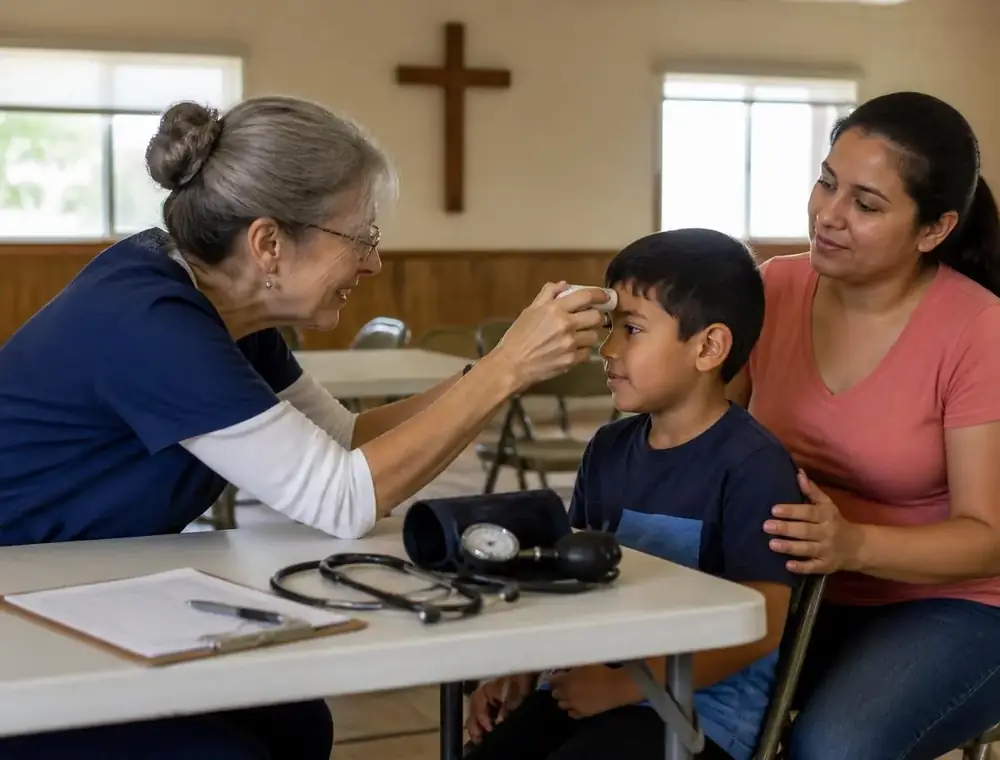
So the first visit has to come to them. When licensed medical volunteers travel with a mission team, we set up screening tables at partner churches: blood pressure, blood glucose, height and weight, basic vision checks, general wellness questions, and simple first aid. Everything happens in Spanish and English. No ID, no insurance and no documentation status is requested or recorded.
What a screen can and cannot do
It is not a clinic and we do not pretend otherwise. A screening table cannot diagnose, cannot prescribe and cannot manage a chronic condition. What it can do is measure four or five things that reliably surface serious problems early, and put a number in front of someone who has not seen one in years.
In practice the readings that stop a volunteer in their tracks are the same ones every time: a blood pressure well into hypertensive range in someone who feels fine, a fasting glucose that suggests undiagnosed diabetes, or vision bad enough that a child has been failing to read the board at school and everyone assumed it was behavior.
The referral is the program
A screening that ends with a number on a card helps no one. Everything outside normal range gets a warm handoff: the name of a specific clinic or county health program, what to ask for, what it will cost, and what to bring. Where a sliding-scale clinic or federally qualified health center serves that county, that is where the referral goes.
Then the host pastor follows up. That step is not glamorous and it is the reason the program works. Someone the resident already knows asks, two weeks later, whether they made the call — and helps arrange a ride if the answer is no because of transportation. A referral nobody checks on is not care; it is paperwork.
Why it works at a church
Residents who would never attend a church service will come for their health. That is not a criticism of anyone; it is simply how trust and need interact. Several of the families now picking up groceries weekly first walked onto the property for a blood pressure check and stayed for a conversation.
It also means the church becomes a known address for help. When outside agencies — county health outreach, enrollment assisters, school nurses — want to reach colonia residents, our partner community centers give them a place where families are already comfortable walking in.
Bringing a medical team
We host medical volunteers year round as team schedules allow. Licensed nurses, nurse practitioners, physicians, physician assistants, pharmacists, optometrists and dentists are all usable; so are bilingual volunteers with no clinical training, who run intake and keep lines moving. Bring current licensure, and expect to work under the scope your license allows in Texas.
We supply the sites, the tables, the crowd and the local referral list. Teams typically bring their own cuffs, glucometers and consumables — tell us what you have and we will fill the gaps. Screens run best in the morning before the heat, at a church that has already announced it to the neighborhood for two weeks.
If you are a Valley resident
Screens are free and open to anyone at the host site, adults and children. Nothing is billed, nothing is reported and no one is turned away. If you know your numbers are bad and have been avoiding a clinic because of cost, come anyway and let us tell you what your actual options are in this county — for many families they are better than assumed.
Be part of the next update
Food, home repairs and school supplies across the Valley are funded entirely by people who choose to give. Hearts 4Kids is a 501(c)(3) public charity.
Get the next update by email
A short email every few weeks: field updates, program news and the occasional story from the center. No spam, unsubscribe any time.
Prefer a reader?Subscribe to our RSS feed