Health screens & referrals
Free community health screens with visiting medical volunteers, plus the referral that gets someone into a Valley clinic before a problem becomes an emergency.
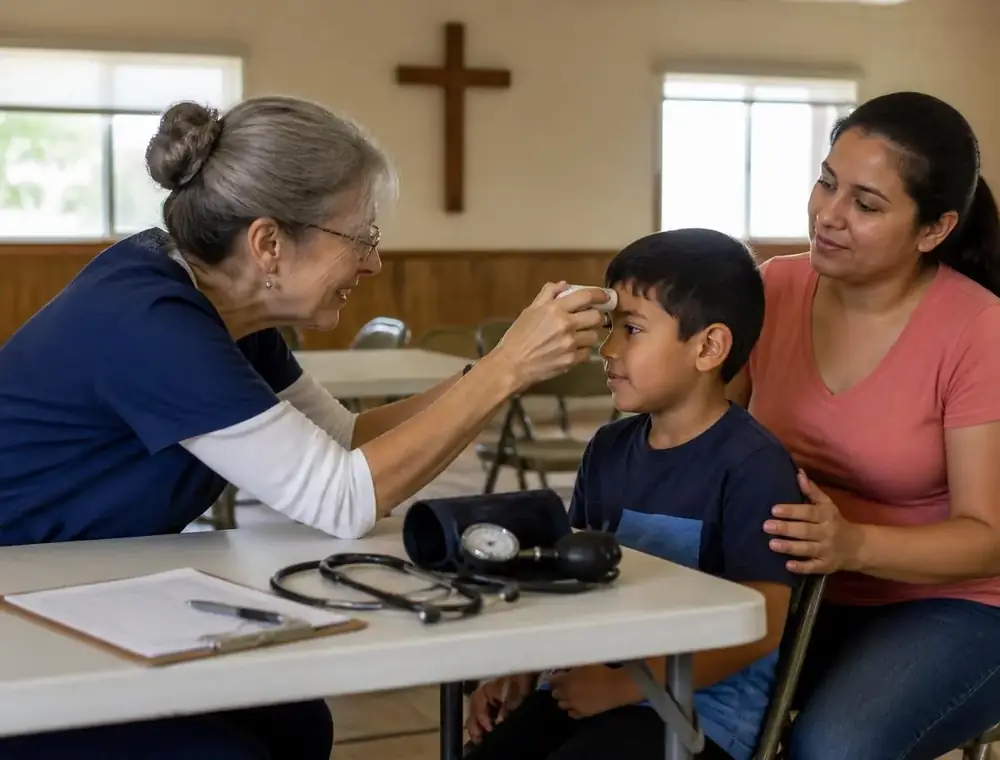
The Rio Grande Valley has some of the highest rates of uninsurance and diabetes in the country, and for a colonia family the barrier is rarely the diagnosis — it is the clinic hours, the drive and the cost of the first visit. When medical volunteers travel with a mission team, we set up screens at partner churches: blood pressure, glucose, vision, general wellness checks and basic first aid, in Spanish. Anything that needs more than a screen gets a warm handoff to a local clinic or county program, and the host church follows up, because a referral no one checks on is not care.
What a screen covers
Blood pressure, blood glucose, height, weight and BMI, pulse and oxygen saturation, distance and reading vision with donated glasses where we have them, and a short conversation about symptoms, medications and barriers to care. Children are checked for vision, growth and untreated skin or dental issues. Everything is recorded on a paper card the resident keeps.
What we do not do
We are a screening and referral program, not a clinic. Volunteers do not diagnose, prescribe, perform procedures or manage chronic disease on site, and we do not replace emergency care. Anyone with an urgent reading — a hypertensive crisis, a blood sugar far outside range, chest pain — is walked directly into the local emergency or urgent-care pathway that day.
The referral is the program
A reading with no next step changes nothing. Every resident who screens outside normal range leaves with a written referral to a specific Valley clinic or county program, an explanation in their own language of what the number means, and their name on a list the host pastor keeps. The church follows up in the weeks after the team leaves, and the next visiting team rescreens the same residents where possible.
Credentials for medical volunteers
Physicians, nurse practitioners, physician assistants, registered and licensed vocational nurses, dentists, optometrists, pharmacists, EMTs and students under supervision all serve on these weeks. Licensed volunteers work within their scope and provide a copy of a current license before the trip; Texas rules on out-of-state volunteer practice are reviewed with each team in advance. Non-clinical volunteers are just as necessary: intake, translation, crowd flow, childcare and data recording.
How it works
- Screens hosted at partner churches during medical mission weeks
- Blood pressure, glucose, vision and general wellness checks by licensed volunteers
- Referrals into Rio Grande Valley clinics and county health programs
- Host pastors follow up with residents after the team leaves
Who it’s for
- Open to any resident at a participating church site, adults and children
- No insurance, ID or documentation status required
- Bilingual English and Spanish volunteers on site
- We provide screening and referral, not emergency or ongoing clinical treatment
What we’re seeing
- Undiagnosed high blood pressure and blood-sugar readings are found in residents who had not seen a provider in years
- Referrals connect uninsured residents to clinics that already serve the county
- Screens draw residents who would not attend a church event but will come for their health